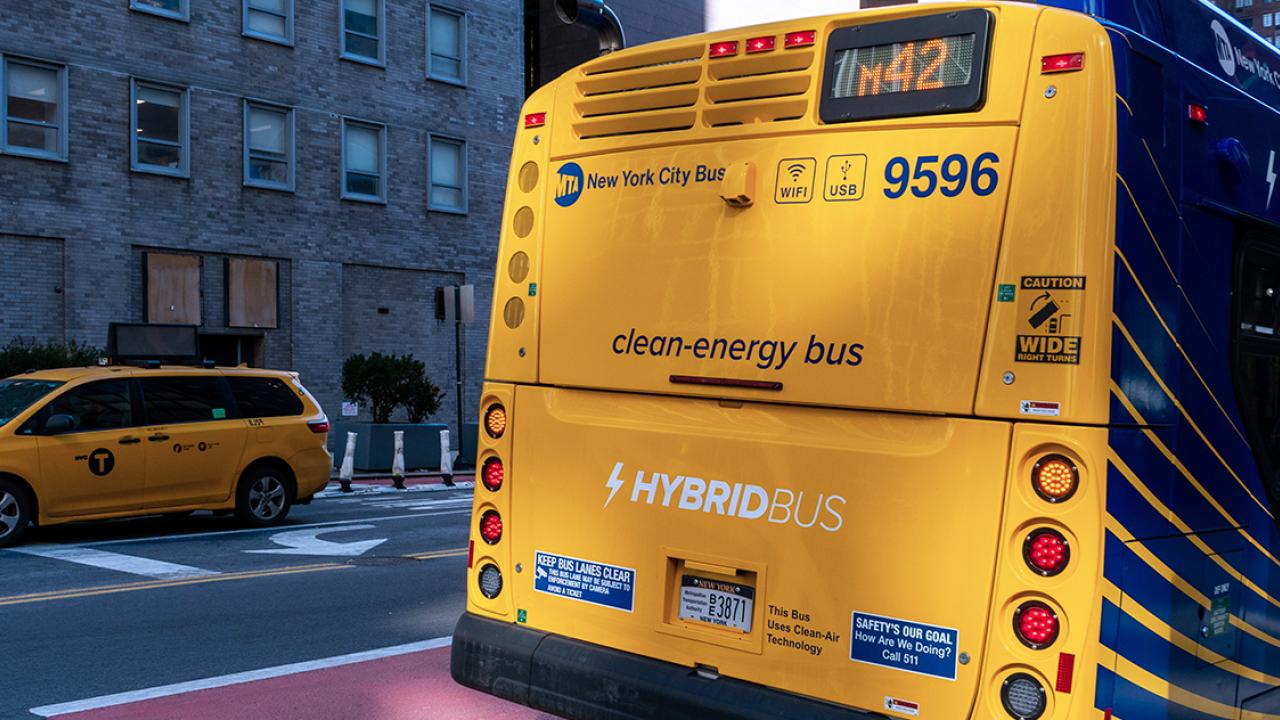
The transition of the Metropolitan Transportation Authority (MTA) bus fleet in New York City to cleaner fuels and engines was followed by declines in air pollution, particularly nitrous oxide. The study was led by scientists at Columbia University Mailman School of Public Health, Columbia Irving Medical Center, and Drexel University Dornsife School of Public Health. The findings are published in the Journal Of Exposure Science And Environmental Epidemiology.
Beginning in 2000, the MTA began deploying compressed natural gas, hybrid electric, and low-sulfur diesel buses to reduce urban air pollution. In addition, existing buses were retrofitted with diesel particulate filters. The Federal Clean Air Act of 1990 set standards for all new bus purchases. Select cities, including New York City, were mandated to purchase clean fuel buses.
The researchers examined air pollution concentrations in 9,670 300mx300m grid cell areas across the five boroughs, as measured by the New York City Community Air Survey, between 2009 and 2014, as the MTA transitioned its fleet to clean buses. Data were assessed alongside depot- and route-specific data on the fleet transition and bus traffic sourced from publicly-available data and FOIL (Freedom of Information Law) requests.
The researchers found declines in nitrogen oxide (NO), nitrogen dioxide (NO2), and black carbon (BC), even in the 40 percent of cells without bus service. Declines in concentrations of NO and NO2 were greater in areas with more bus service and with higher proportional shifts toward clean buses, adjusted for truck route presence and total traffic volume.
Shifts toward clean bus service were associated with slower declines in BC concentration. This finding may be explained by the fact that hybrid diesel buses can produce more particulate matter than their conventional counterparts due to their smaller engine size. Alternately, it may be because the study was better attuned to measures of fresh combustion emissions such as NO, for which exposure rapidly decreases with distance to busy roadways.
“Our results provide evidence that the New York City clean bus program impacted concentrations of air pollution,” says first author Gina Lovasi, PhD, associate dean for education and Dornsife associate professor of urban health at Drexel University Dornsife School of Public Health. “It is likely that similar changes have happened or could be realized in other cities.”
“Air pollution is harmful to everyone, particularly children, and is known to raise risk for a host of health problems, from asthma to cognitive and behavioral problems,” adds study co-author Frederica Perera, PhD, director of translational research at Columbia University Center for Children’s Environmental Health and professor of environmental health sciences at Columbia University Mailman School of Public Health.
Additional co-authors include Isha Shah, Alique Berberian, and Marianthi-Anna Kioumourtzoglou, Columbia Mailman School of Public Health; Christian Treat, Columbia University Vagelos College of Physicians and Surgeons; and Dustin Fry and Jane Clougherty, Drexel University School of Public Health.
Funding support was provided by the National Institute of Environmental Health Sciences (NIEHS) and the Environmental Protection Agency (ES09600), the NIEHS Center for28 Environmental Health in Northern Manhattan (ES009089), the John and Wendy Neu Family Foundation, and the Blanchette Hooker Rockefeller Foundation. The authors confirm no conflicting financial interests.